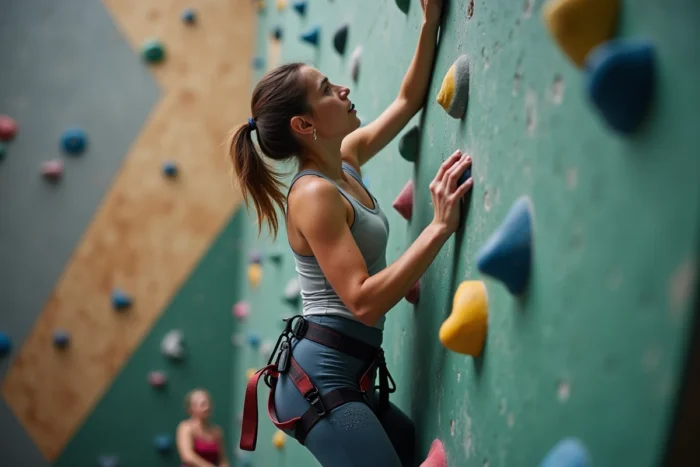
The word “varappe” is still used in everyday language, often as a synonym for climbing. However, the two terms refer to realities that overlap without completely merging. One refers to a Swiss toponym from the 19th century, while the other encompasses a structured Olympic sport with codified disciplines. Understanding what separates them also measures how much the vocabulary of climbing has evolved over a century.
Varappe: a word born from a gorge in Salève, not from a sports regulation
The term “varappe” originates from the combe de la Varappe, a rocky site located near Geneva, on the Salève massif. In the late 19th century, mountain enthusiasts, often from the Geneva bourgeoisie, climbed these steep walls. They eventually named their practice after the place itself.
Before the term “escalade” became dominant in the sports field, “varappe” generically referred to the action of climbing on natural rock. The term was common in accounts of mountain climbs and in the early French-speaking alpine clubs. It has never been subject to federal codification or a precise technical definition.
Today, some clubs affiliated with the FFCAM, such as the one in Morteau, continue to use the word in their climbing logs. It functions more as a cultural and identity marker than as a fully-fledged sports category. To delve deeper into the difference between climbing and varappe on Sportsland, the historical context remains the most reliable starting point.
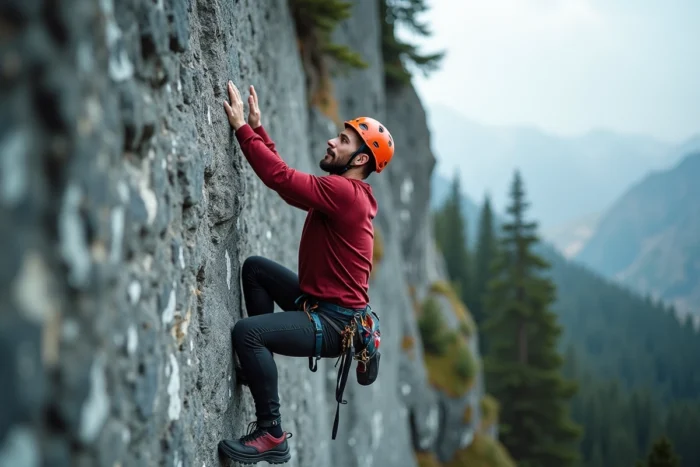
Climbing: a codified sport with distinct Olympic disciplines
Climbing encompasses a set of practices structured by national and international federations. The IFSC (International Federation of Sport Climbing) officially recognizes three disciplines: bouldering, lead climbing, and speed. These three formats have been included in the program for the 2024 Summer Olympics in Paris.
This structuring has direct consequences on vocabulary. In professional training references, only the term “climbing” appears. The DEJEPS Climbing in Natural Environments, created in 2006 and updated since, never mentions the word “varappe”. State diplomas, coaching certifications, and regulatory texts exclusively refer to climbing, whether the practice takes place indoors, on cliffs, or in multi-pitch routes.
The Olympic officialization has further accelerated this standardization. International media, sponsors, and sports bodies use “climbing” (or “climbing” in English) as the sole term. Varappe, in this context, simply has no status.
Indoor or outdoor climbing: where is the boundary between the two terms
One of the most concrete angles to distinguish the two words concerns the practice environment. Varappe, in its historical sense, is limited to natural rock. It evokes outdoor climbing on unprotected or minimally protected walls, in a mountainous setting.
Climbing, on the other hand, does not have this restriction. It can be practiced:
- Indoors, on artificial walls equipped with holds and volumes, with graded and regularly updated routes
- On sport cliffs, on routes equipped with fixed anchors (bolts, screws), with belays and chains at the top of the route
- On multi-pitch routes, on itineraries of several rope lengths in the mountains, sometimes on poorly protected adventure terrain
- In outdoor bouldering, on low rocks, with crash pads and spotting, without rope or harness
Varappe would correspond, in this framework, to only a part of the spectrum: climbing on natural rock, without modern infrastructure. Speaking of “indoor varappe” would be a historical misunderstanding, even if familiar usage sometimes allows it.
Equipment as a revealer
The equipment used reflects this difference in era and context. Original varappe was practiced with rudimentary gear: high-top shoes, hemp ropes, little to no harness. Contemporary climbing employs technical shoes with high-friction rubber, lightweight harnesses, dynamic belay systems, quickdraws, and, indoors, automatic belay devices.
Bouldering, the leading discipline indoors, reduces equipment to the bare minimum: shoes, chalk, and crash pads outdoors. This economy of means has nothing to do with the deprivation of historical varappe. It results from a deliberate sporting choice, focused on gestural difficulty over short passages.
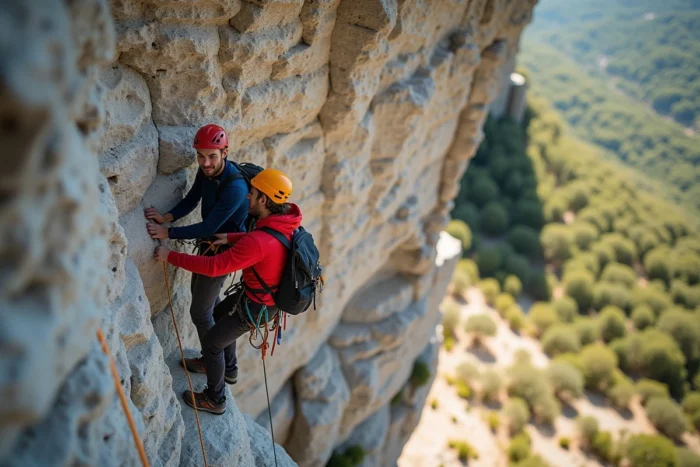
Varappe and climbing in everyday vocabulary: a persistent shift
Despite the lack of official recognition, the word “varappe” remains alive in the French language. It is used by non-practitioners to refer to climbing in general, often with a connotation of physical effort on rock. General media sometimes use it synonymously, without technical distinction.
This linguistic shift creates an ambiguity that regular practitioners clearly perceive. For a climber who climbs indoors on 7A boulders, being told they “do varappe” sounds like a mismatch. The term refers to a time when climbing was not yet a fully-fledged sport, but a component of mountaineering and hiking.
Field feedback diverges on this point: some climbers claim the word out of cultural attachment, while others consider it outdated. The French Federation of Mountain and Climbing (FFME) does not use “varappe” in its official communications. Only the term “climbing” appears in the competition organization rules updated in 2026.
A word that survives through usage, not by norm
Varappe is neither a subtype of climbing nor a competing discipline. It is a word predating the sporting structuring of climbing, which has retained a strong evocative charge. It speaks to something of raw rock, effort without grading, and mountains before gyms and competitions.
Climbing, on the other hand, has absorbed and surpassed what varappe designated. It now covers a spectrum that ranges from initiation walls for children to the Olympic speed final. Varappe is the ancestor, climbing is the sport. The two words coexist in the language, but no longer in the texts that frame the practice.