
When a claim occurs, the insurer appoints its own expert to assess the damages and propose compensation. The insured receives a technical report that they may not always have the means to contest. The gap between the insurer’s initial assessment and the actual amount owed often depends on the ability to analyze the contract, document the damages, and argue on technical grounds. This is precisely the role of a claims expert appointed by the insured.
Company Expert and Insured Expert: What Each Defends
The confusion between these two profiles remains common. Their technical training may be similar, but their mission and their client differ on structural points.
| Criterion | Expert appointed by the insurer | Insured expert |
|---|---|---|
| Client | The insurance company | The insured (individual or business) |
| Main objective | Assess damages on behalf of the insurer | Defend the interests of the insured and optimize compensation |
| Access to the contract | Analyzes the coverage to frame the compensation | Analyzes the coverage to identify what the insured can mobilize |
| Report submitted to | The insurer (the insured can request a copy) | The insured, who decides on the next steps |
| Fee coverage | Included in the insurance contract | Charged to the insured, unless a specific contractual clause applies |
The company expert is not an adversary, but their mission is to contain the cost of the claim within contractual limits. The insured expert seeks to increase compensation within those same limits. Both read the same contract, but not with the same objective.
For insured individuals looking to identify a specialized firm in this process, organizations like the one presented at https://www.expertell.be/ offer dedicated support for complex claims.
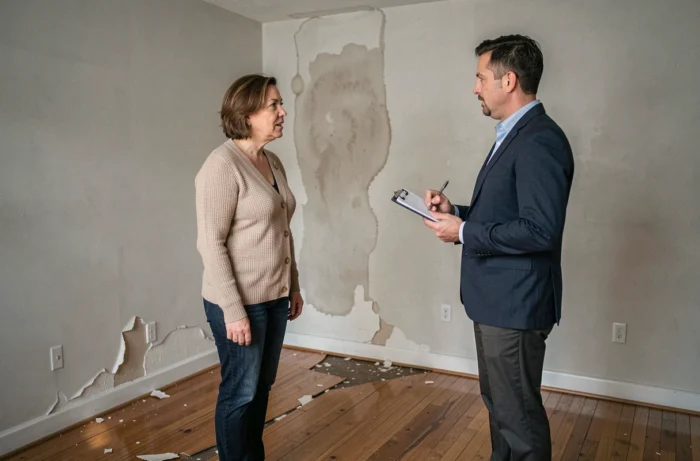
“Expert Fees” Coverage: A Contract Clause to Check Before a Claim
The cost of an insured expert often constitutes the first obstacle. The question of funding should be raised well before a claim occurs, as coverage depends on the clauses of the contract and may be capped.
Some home insurance or multi-risk professional contracts include a “insured expert fees” coverage. This coverage covers all or part of the costs incurred to appoint an independent professional. The cap and the covered events vary from one contract to another.
- Check for the existence of the coverage in the specific conditions of the contract, not just in the general conditions
- Identify the coverage cap and the types of eligible claims (fire, water damage, natural disaster)
- Read the triggering conditions: some contracts require that the expert be appointed before signing the amicable expert report
Signing a fee agreement without verifying this clause exposes the insured to bear the full costs. In low-stakes claims, the cost-benefit ratio may not justify the use of an insured expert.
Dryness Claims: A Field Where Insured Expertise Changes the Game
Cases related to drought and soil rehydration illustrate the gap between an accompanied insured and an isolated insured. These claims present technical characteristics that complicate the assessment: evolving damages, difficult causality to establish, long compensation delays.
A specific framework now requires that the final report describe the building, the disorders, their probable origin, and the recommended works. The insured can also request the reports of the visits conducted by the company expert.
Documenting the Evolution of Damages
In a crack-related file linked to drought, the proof relies on chronology. Dated photos taken at various times, the history of works carried out on the building, or a previous soil study help document the evolution of the disorders.
An insured expert utilizes these elements to contest the causality or the proposed repairs in the company expert’s report. Without this documentation, the insured faces a technical report that they cannot verify or discuss substantively.
Discussing Technical Reasoning, Not Just the Amount
The expert report is not limited to a figure. It contains reasoning: what is the origin of the disorder, what works are necessary, what repair method is chosen. The insured expert can contest each of these steps with documented technical arguments.
Challenging the chosen repair method (injection of resin rather than underpinning, for example) can significantly alter the amount of compensation, as the costs of works vary according to the recommended technique.

Damage Assessment and Insurance Contract: Two Possible Readings
Compensation does not solely depend on the extent of visible damage. It results from the intersection between the technical assessment of damages and the coverages mobilizable in the contract. The same claim can lead to very different compensations depending on the activated clauses.
The company expert applies the coverages they identify. The insured expert, on the other hand, scrutinizes the contract to spot coverages that the insurer has not spontaneously mobilized: loss of use, relocation costs, loss of market value, loss of earnings for professionals.
This re-reading of the contract does not involve systematic contestation. It starts from a simple observation: insurance contracts contain dozens of pages of conditions, and some coverages are only activated if the insured explicitly requests them.
- Loss of earnings coverage: often underestimated in professional claims, as the evaluation of gross margin is open to interpretation
- New value coverage: applicable only if the contract provides for it and if the maintenance conditions of the property are respected
- Ancillary costs (debris removal, regulatory compliance): frequently omitted in initial estimates
A well-documented and technically argued file does not guarantee an automatic agreement from the insurer. However, it reduces the unilateral negotiation margin and places the exchange on a factual ground, where each item of damage is justified by documents and an analysis of the contract.
The data that conditions everything else is neither the amount of the claim nor the choice of the expert: it is the careful reading of the contract before and after the claim. Without this reading, the insured endures the assessment. With it, they can discuss it.