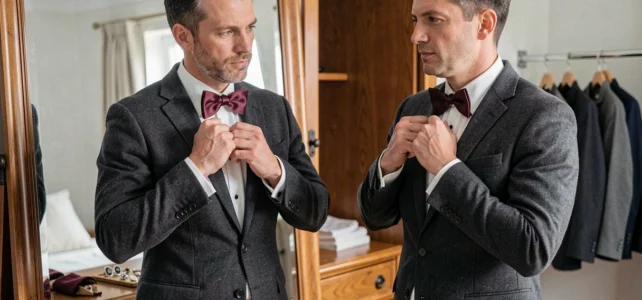
We’ve all seen that wedding guest whose bow tie hung limply on an overly wide collar, or that attendee whose loud pattern overwhelmed a well-tailored suit. The problem is almost never the bow tie itself; it’s the pairing. Choosing a bow tie for a suit in 2026 is primarily a matter of proportions, material, and coherence with the rest of the outfit.
Bow Tie and Shirt Collar: The Duo that Sets the Tone
Before thinking about color or pattern, we start with the collar. A bow tie worn on an unsuitable collar immediately gives a disguised look. The wide Italian collar or the cutaway collar are the best allies of the bow tie, as they provide enough space for the knot to breathe without crushing the fabric.
A slightly tight classic collar can work if the knot is slim (batwing type), but large round-ended bow ties (butterfly) require an open collar. We avoid the button-down collar, which flattens the fabric and creates a visual conflict with the accessory.
The Mao collar or the officer collar are sometimes worn with a bow tie at casual weddings. Opinions vary on this point, but the result remains quite divisive. If you haven’t tried the combination in front of a mirror with the complete suit, it’s better to abstain.
To delve deeper into the rules of pairing bow ties and suits, you can visit Aleph Zarro for more info on combinations that work according to body types and occasions.
Materials for the Bow Tie: Linen, Silk, Wood, and Upcycled Fabrics in 2026

The material of the bow tie determines both the drape, the hold of the knot, and the style of the outfit. In 2026, there is a noticeable rise in sustainable and natural materials, especially for outdoor weddings.
- Natural linen is establishing itself as the trendy material for a bohemian or rustic style. It creases slightly, giving it a lived-in look, but one must accept this appearance or iron the knot just before wearing it.
- Silk remains a safe bet for formal ceremonies. Its subtle sheen pairs well with fine wool or gabardine suits. It is preferred for city weddings or formal evenings.
- Wooden bow ties, made from sustainable materials, are gaining ground. Wrinkle-free and eco-friendly, they work well with cotton or linen suits, but may seem out of place with a dark wool three-piece.
- Upcycled fabrics (recycled cotton, repurposed fabric scraps) appeal to couples sensitive to environmental impact. The result largely depends on the quality of the artisanal craftsmanship.
The operational rule is simple: align the material of the bow tie with that of the suit. A wooden bow tie on a charcoal three-piece creates a dissonance. A silk bow tie on a beige linen jacket does too.
Matching the Color and Pattern of the Bow Tie to the Suit
The trend for 2026 leans towards a clear rule: one strong pattern per outfit. If the suit is solid, the bow tie can afford a pattern (polka dots, fine stripes, liberty). If the suit already has a pronounced texture (flannel, prince of Wales), stick to a solid bow tie.
For colors, start with the suit and build around it.
Navy Blue or Midnight Blue Suit
This is the easiest territory. A burgundy, garnet, or mustard bow tie creates a controlled contrast. A navy blue bow tie on a navy suit works for a sober look, provided the shade of the knot differs slightly from that of the suit.
Medium Gray or Charcoal Suit
Opt for bow ties in warm tones (rust, terracotta, dusty pink) to avoid a dull monochrome effect. A wine-colored bow tie on a gray suit remains a safe bet for ceremonies.
Beige, Cream, or Sand Suit
Light suits handle bold colors well. A sky blue, sage green, or even coral bow tie can work, especially for a summer outdoor wedding.
Suit Pocket Square and Bow Tie: The Right Coordination
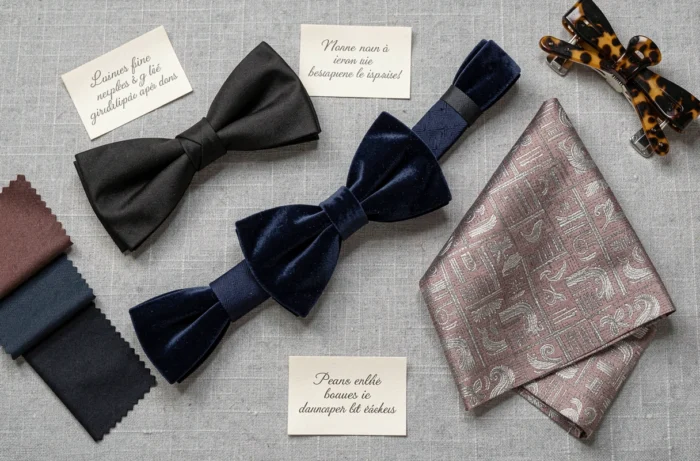
The classic mistake is to buy a matching pocket square-bow tie set. The result looks “ready-to-wear” and kills the elegance of the ensemble. The pocket square should echo a color from the bow tie without copying it exactly.
You can pick up the secondary color of the bow tie (if the bow tie has a pattern), or choose a pocket square in a different material (linen pocket square with a silk bow tie, for example). The idea is to show that the two pieces were thought out together, not purchased in the same blister pack.
For weddings with a procession, extended coordination is gaining popularity. Father-son sets with two matching bow ties in adult and child sizes are among the most requested formats in 2026, especially for ceremonies and communions.
Pre-tied or Self-tie Bow Tie: What Really Changes
A self-tie bow tie creates a slight asymmetry that adds character. It’s the logical choice if you want an authentic look, but you should allow ten minutes of practice before the big day.
The pre-tied version is perfect when you want a clean result without stress. The difference is noticeable up close (the stitching around the neck, the overly perfect symmetry), but from two meters away, no one can tell the difference.
The real criterion for choice remains comfort. A self-tie bow on a shirt with a slightly tight collar will pinch and create creases. If the shirt collar doesn’t offer enough room, the pre-tied option will prevent you from spending the evening adjusting.
Matching a bow tie to a suit boils down to three concrete decisions: the shirt collar suited to the knot’s format, the material aligned with the suit’s style, and a color that complements without duplicating. The rest is just about the mirror and common sense.