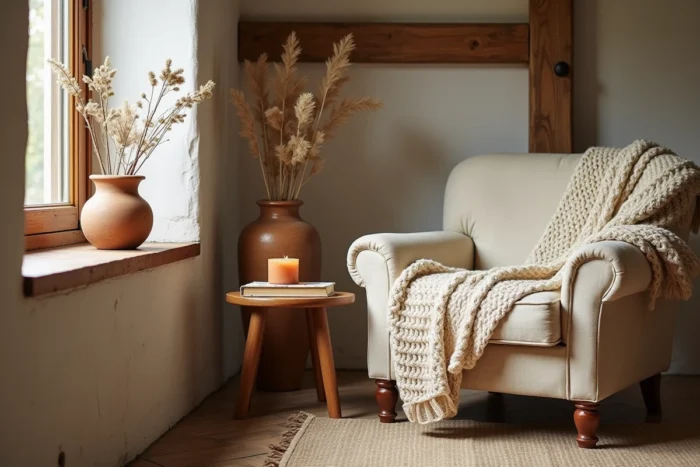
The artisanal register in interior decoration relies on choices of materials and finishes that go beyond mere visual effect. Behind a warm atmosphere lie technical decisions regarding wood species, textile certifications, and how each object occupies space. Here, we detail the concrete levers to build an authentic interior without falling into decorative accumulation.
Material Certifications and Traceability of Artisan Objects
A wooden piece of furniture or a handwoven textile guarantees nothing without traceability. Since 2023-2024, brands focused on authentic decor increasingly display FSC-certified materials, organic cotton, or traceable wool. This trend meets a demand for transparency that goes beyond simple marketing arguments.
We recommend checking three points before any artisanal purchase for the home:
- Wood certification (FSC or PEFC) for furniture, trays, sculpted objects – it attests to controlled forest management and not just a simple “natural wood” label
- The actual textile composition (percentage of organic cotton, presence of blended fibers) rather than the vague mention of “natural materials”
- The geographical origin of manufacturing, which conditions both the quality of finishes and the logistical footprint of the object
Exploring the home universe of Cœur Artisan allows you to spot pieces that adhere to this rigorous selection logic, with noble materials and a clearly defined artisanal positioning.
An object whose provenance and manufacturing method are known ages better in an interior. It acquires a patina consistent with its history, whereas an industrial product disguised as artisanal eventually reveals its weaknesses over the seasons.
Reduced Selection of Decorative Objects: The Rule of Two or Three Pieces per Space
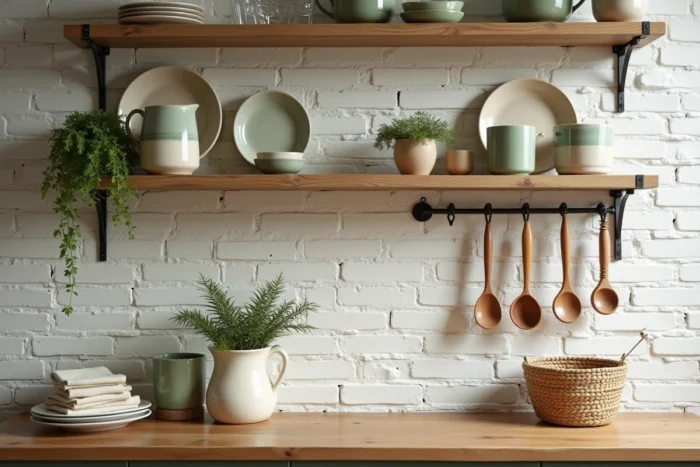
The most common mistake in artisanal decor is accumulation. Recent guides converge on a clear principle: two to three handmade pieces per area are sufficient to create a warm atmosphere without saturating the space.
This approach to controlled staging changes the way we buy. We no longer seek “decorative objects”; we seek a complementarity of materials. A woven fiber basket, a glazed ceramic piece, and a raw wood candlestick cover three distinct textures that converse without competing.
How to Decide Between Pieces
Every visible artisanal object in a space must fulfill at least two functions: a decorative function and a utilitarian or narrative function. A stoneware dish placed on a shelf tells a story if it was made by an identifiable potter. The same dish purchased in bulk loses this dimension.
Allowing each object to breathe in the space also implies working with the voids. A wall featuring only a single antique wooden mirror creates more impact than a composition of five mismatched frames. The emptiness around the object amplifies its presence.
Soft Color Palette and Raw Materials: Building Coherence
Authentic decor does not rely on a signature color but on a balance between neutral tones and accents of raw materials. Linen, terracotta, greige, and off-white shades form the base. Light woods (beech, ash) or darker woods (walnut, smoked oak) add depth.
The technical error lies in mixing too many wood species in the same room. We observe that the most successful interiors in this regard limit themselves to a maximum of two species, complemented by touches of aged metal or natural stone.
The Role of Textiles in Creating a Warm Atmosphere
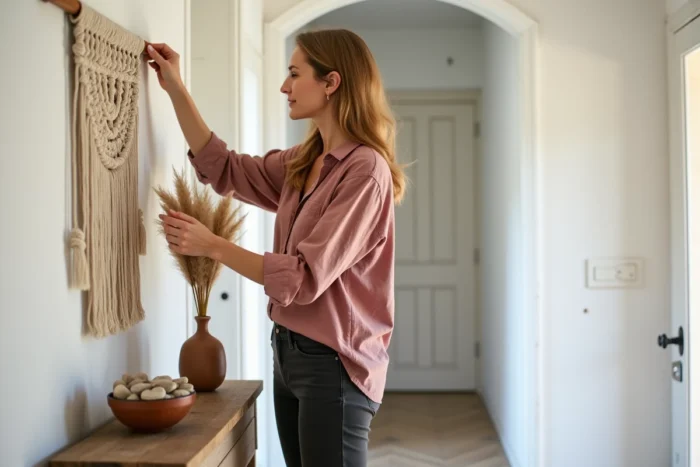
Textile accessories (cushions, throws, linen curtains) play a role as visual and acoustic buffers. A 100% wood and stone interior appears cold despite the nobility of the materials. Adding woven fibers in cotton or wool breaks this rigidity.
Favor discreet patterns or solid textures rather than busy prints. A wrinkled linen cushion with visible stitching brings more artisanal character than an industrially produced ethnic-patterned cushion.
Candles, Lighting, and Accessories: The Details That Anchor the Style
Artisanal candles made from vegetable wax and lighting fixtures made from natural materials are the finishing touches of a warm interior. Their role goes beyond ambiance: the quality of light defines the perception of surrounding materials.
A soy wax candle poured into a stoneware container emits a warmer light than a standard scented candle in a glass jar. The container matters as much as the flame. Lighting fixtures made of rattan, turned wood, or brushed metal extend this material coherence into artificial lighting.
Accessories to Avoid
Some objects sabotage an artisanal decor without us realizing it:
- Fake decorative books placed on a coffee table, which contradict the authenticity sought
- High-end artificial plants, which deceive the eye but not the touch or the patina over time
- Decorative trays made of resin imitating wood, recognizable by their weight and sound
Replacing these elements with their real counterparts (read books, live plants, solid wood trays) transforms the space without altering the layout. Authenticity lies in the material, not in the form.
A convincing artisanal interior ultimately relies on a discipline of selection. Fewer objects, better chosen, with traceable materials and a narrowed palette. The rest—the softness, the warm spirit, the feeling of a lived-in place—naturally follows.