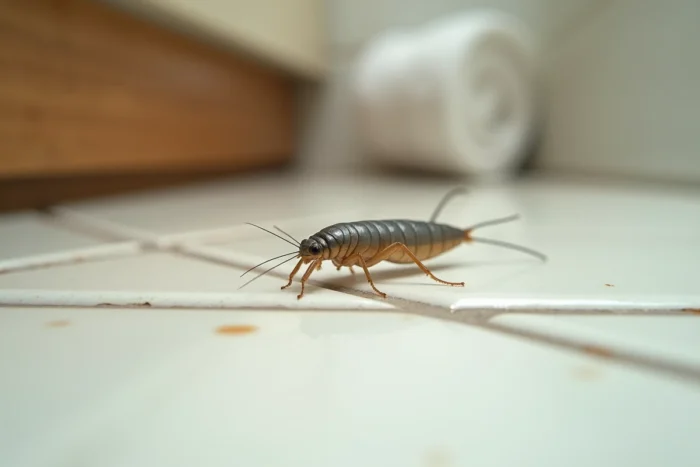
The ophone is a small beetle from the carabid family, often confused with the cockroach due to its dark color and elongated silhouette. This insect, active at night, enters homes attracted by light and humidity, without representing a health risk comparable to that of a cockroach. Understanding its biology and the reasons for its presence helps avoid unnecessary treatments and respond appropriately.
Efficient housing and poor ventilation: why ophones enter more
Competitors describe the confusion with the cockroach but rarely address the entry mechanism of ophones into the habitat. The dynamics are indeed linked to concrete factors, particularly in recent or renovated housing.
A well-insulated but poorly ventilated building creates a warm and humid indoor microclimate. Ophones, which normally live in the plant litter of gardens, detect these favorable conditions. Open windows in the evening during hot periods, combined with indoor lighting, serve as a direct call for these nocturnal beetles.
This phenomenon intensifies during heatwave episodes. The external dryness drives insect ophones into the house to seek cooler and more humid areas, such as kitchens, bathrooms, or basements. Sealant defects at door thresholds, conduit passages, and poorly sized ventilation grilles provide easy access for them.
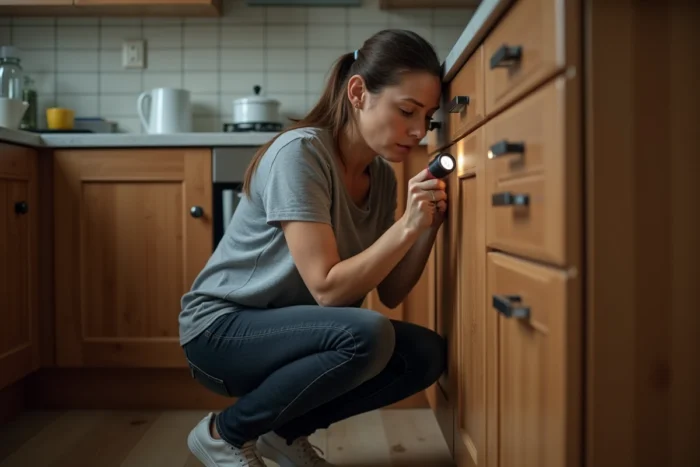
An efficient but poorly ventilated home paradoxically attracts more insects than an old house with natural drafts. Condensation on joinery and residual humidity in wet rooms act as signals for these beetles.
Ophone or cockroach: reliable criteria for correct identification
The confusion between ophone and cockroach leads to unnecessary pest control interventions every summer. A few morphological criteria allow for quick differentiation.
- The rigid elytra of the ophone completely cover its abdomen and form a hard shell to the touch, while the cockroach has soft membranous wings, sometimes visible beneath thinner elytra.
- The ophone generally measures less than one centimeter and has a stout body, often shiny black or dark brown. The German cockroach is lighter, brown with stripes, and the oriental cockroach is larger and flattened.
- The antennas of the ophone are short and thick, clearly visible. Those of the cockroach are thread-like, long, sometimes longer than the body itself.
- The ophone, when threatened, remains still or moves slowly. The cockroach flees at high speed into the darkness.
A dark insect that does not flee when the light is turned on is likely to be an ophone. This behavior alone allows for the exclusion of the cockroach hypothesis in most domestic situations.
Ophones in the house: an insect with no real health danger
The ophone does not transmit any known diseases, does not bite, and does not contaminate food. Its presence in a kitchen or bathroom does not constitute a hygiene problem in the sanitary sense of the term.
The nuisance is primarily perceptual. Seeing a dark insect moving on a countertop or along a baseboard triggers a legitimate concern. In a collective context (condominium, public establishment), this perception can quickly generate repeated reports and an impression of unsanitary conditions.
The ophone does not justify a chemical insecticide treatment. Using products intended for cockroaches against a harmless beetle unnecessarily exposes occupants to active substances, pollutes the indoor environment, and eliminates an insect that plays a useful role in the garden by consuming larvae and small invertebrates harmful to crops.
Ultrasonic devices against insects: unproven effectiveness
Faced with repeated intrusions, some occupants turn to ultrasonic devices marketed as universal repellents. The DGCCRF has been monitoring these devices for a few years due to misleading marketing claims.
No identifiable independent study proves the lasting effectiveness of these devices at the frequencies and powers advertised for the general public. Ophones, like most beetles, do not possess an auditory organ sensitive to the ultrasound range proposed by these devices. Investing in an ultrasonic device to repel ophones amounts to spending money for a placebo effect.
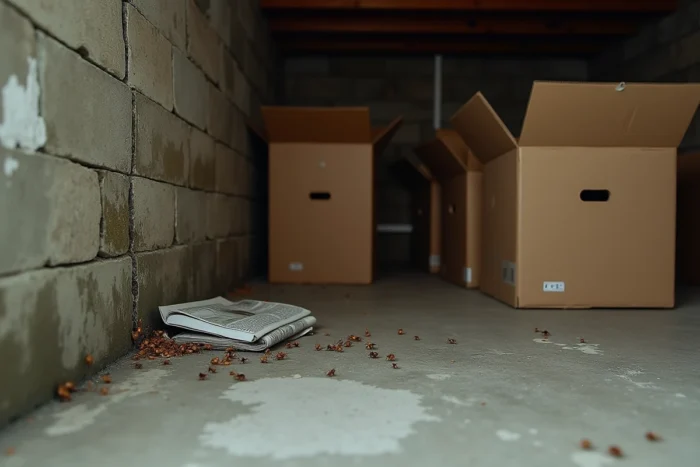
Concrete tips to limit ophone intrusions
Prevention relies on simple interventions, without chemicals, that target access routes and attractive conditions.
Reduce light attraction and humidity
Turning off unnecessary outdoor lights in the evening or replacing them with yellow spectrum bulbs, which are less attractive to nocturnal insects, significantly decreases the number of ophones drawn to openings. Indoors, proper ventilation of damp rooms (functional VMC, daily airing) reduces the humidity level that retains them.
Seal entry points at the joinery
Worn window seals, door bottoms without sweeps, and wide-mesh ventilation grilles are the main passages. Installing fine mesh screens on frequently opened windows in summer remains the most effective and least expensive solution.
- Check the peripheral seals of windows and patio doors at least once a year.
- Install a door sweep on thresholds leading to the garden or terrace.
- Regularly clean the VMC grilles to maintain sufficient airflow and avoid areas of stagnant humidity.
Outdoor garden management
Ophones live in plant litter, under stones, and in mulch. Removing piles of dead leaves, stored wood, and planters placed directly against the walls of the house reduces the population in the immediate vicinity of openings. A cleared space of about thirty centimeters between the wall and dense vegetation limits passages to the inside.
The ophone remains a garden ally that consumes slugs, aphids, and various larvae. Trapping or systematically eliminating it removes a natural ally against pests that are much more problematic for crops and plantings.