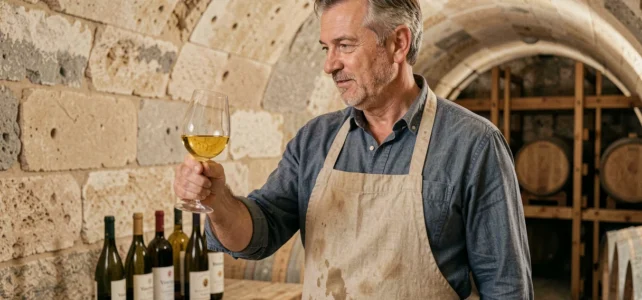
The Vouvray appellation celebrates its 90th anniversary in 2026. Nine decades of official existence for a vineyard whose roots date back to the 4th century, and which is currently undergoing profound changes. The chenin blanc, the unique grape variety of the appellation, produces a range of wines here, from crisp dry to concentrated sweet, including traditional method sparkling wines.
This diversity, often summarized in a few lines by guides, masks more complex realities on the ground, particularly under the influence of climate change.
Chenin blanc from Vouvray: a grape variety under climate pressure in 2026
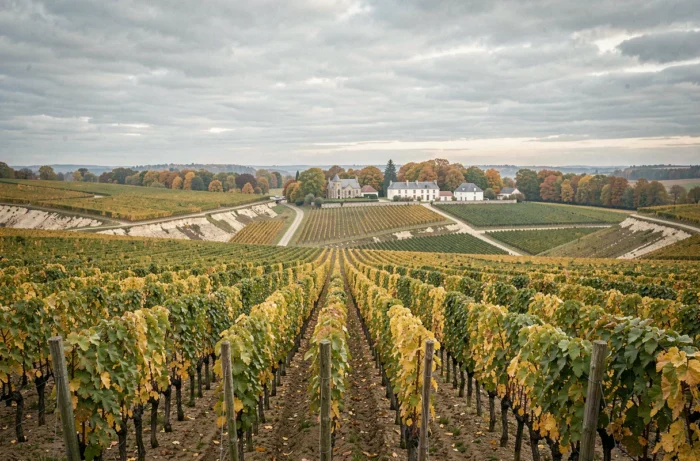
The 2026 harvest in Vouvray illustrates a shift. The interprofessional organizations of the Loire Valley note an advance of about fifteen days in the vegetative stages, with chenin harvests starting as early as the end of August. This early ripening, linked to an exceptional heatwave, has no recent precedent in the memory of the appellation’s winemakers.
The profile of the wines is altered as a result. The dry and semi-dry Vouvray wines from the 2026 vintage display higher alcohol levels and lower acidity than in a so-called cool year. The “sunny” character of these wines breaks with the classic image of Loire chenin, which is typically taut and mineral. For enthusiasts accustomed to the liveliness of Vouvray, the contrast will be stark.
The historic estates of the appellation, whose cuvées are referenced on philippebredif.fr, have been cultivating this grape variety on tuffeau and clay-limestone plots for generations. The chenin’s ability to reflect every variation of soil and climate makes it a faithful marker of the year’s conditions, for better or for the most extreme vintages.
Sweet Vouvray: yields under significant pressure
The great sweet and late harvest wines are the historical showcase of Vouvray. Their production relies on late harvests, sometimes through successive selections, to collect grapes affected by noble rot or passerillage. This process requires time on the vine, which recent heatwaves are making increasingly risky.
In 2026, reports from Loire winemakers indicate that the extreme heat has scorched a portion of the chenin berries, potentially affecting up to 40% of the grapes on the most exposed plots. Sorting then becomes much stricter, volumes drop, and only a fraction of the harvest reaches the concentration level required for a sweet wine worthy of the appellation.
Field feedback varies on this point: some winemakers believe that the concentration achieved compensates for the volume losses, while others argue that the sugar-acidity imbalance detracts from typicity. The available data does not allow for a conclusion on the final quality of the vintage before the first bottlings.
What this means for the consumer
Vouvray sweet wines are becoming rare and more expensive cuvées. The pressure on volumes drives prices up, while the aromatic profiles evolve towards more candied fruits and less citrus freshness. Fans of classic Vouvray sweet wines may need to turn to older vintages to find this style.
Vouvray Terroir: tuffeau, clay, and soil diversity
The Vouvray appellation area covers eight municipalities on the right bank of the Loire, east of Tours.
The local geology distinguishes several types of soils:
- Tuffeau, a soft limestone rock typical of the Loire Valley, which ensures natural drainage and imparts a recognizable chalky minerality to the wines.
- Flint clay, found on the plateaus, which produces more structured chenins, with a denser mouthfeel.
- Gravel and sand soils, at the foot of the slopes, where wines gain roundness and fruitiness, with more accessible profiles when young.
This mosaic explains why two dry Vouvrays from plots just a few hundred meters apart can exhibit very different characteristics. The soil takes precedence over the vintage in defining a domain’s style, making knowledge of the lieux-dits more relevant than just reading the label.
Tasting Vouvray wines: guidelines for reading the label
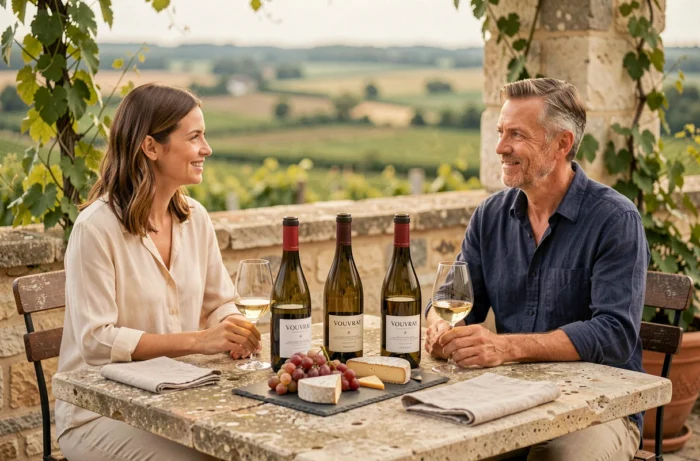
The Vouvray appellation encompasses very different tasting profiles under one name, which can be confusing at the point of purchase. The label remains the primary reference, provided you know how to decode it.
- The term “dry” indicates a wine with less than 8 grams of residual sugar per liter. This is the liveliest style, suitable for seafood and Touraine goat cheeses.
- “Semi-dry” falls between dry and sweet, with a slight sweet roundness that makes it a versatile companion, especially with spicy dishes or sauced poultry.
- “Sweet” designates a distinctly sugary wine, often from late harvests. It is enjoyed chilled, with a fruit dessert or as an aperitif.
- The mention “traditional method” indicates a sparkling wine made with a second fermentation in the bottle, following the same principle as champagne. The fine bubbles of Vouvray have indeed contributed to the growth of the appellation since the 1930s.
The troglodyte cellars carved into the tuffeau play a role in the aging of the wines. The constant temperature and natural humidity of these galleries allow for slow aging, favorable for the development of tertiary aromas (wax, honey, dried fruits) in the great chenin cuvées.
Aging potential of Vouvray chenin
A well-made sweet Vouvray can be kept for several decades. Quality dry wines also gain complexity after five to ten years in the cellar. The natural acidity of chenin, even when softened by warm vintages, remains a factor for longevity superior to most French whites.
The AOC Vouvray, recognized since 1936 by the INAO, strictly regulates yields and cultural practices. This recognition has allowed for the delineation of a geographical area that guarantees the identity of the terroir. The climate, meanwhile, continues to reshape the style of the wines, a topic that will occupy winemakers well beyond the 2026 vintage.