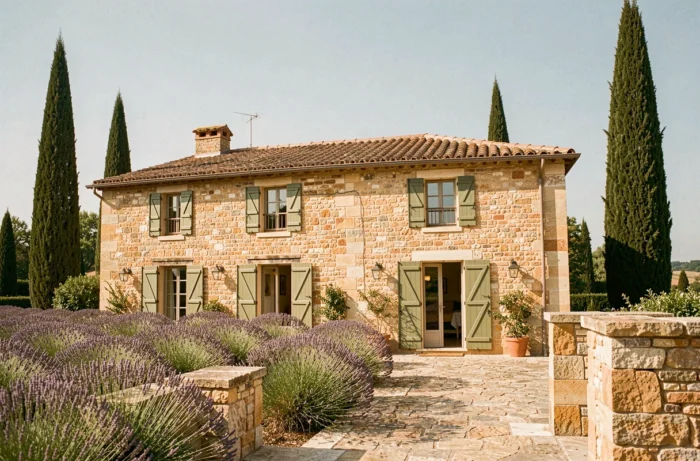
The farmhouse from Tomorrow Is Ours, a recurring setting for the Delcourt family and the oyster farming activity in the series, does not exist as a unique and fixed location. The exteriors seen on screen are filmed in Sète and around the Thau basin, while the interiors are recreated in the production studios. This distinction between the real facade and the modular set changes the game for fans hoping to find “the” farmhouse on-site.
Studio set or real location: what the screen shows and what exists in Sète
Confusion is common. The table below summarizes the distinction between what is filmed outdoors (visible, locatable) and what is part of the studio (not visitable).
| Farmhouse element | Type of set | Location | Accessible to visitors |
|---|---|---|---|
| Exterior facade / surroundings | Real location | Sète, Thau basin | Visible from the street or path |
| Interior (kitchen, living room, bedrooms) | Studio set | DNA Studios, Avenue du Maréchal Juin, Sète | No (closed set) |
| Oyster park / docks | Real exteriors | Shores of the Thau pond | Partially (some public access) |
| Night scenes or closed sets | Studio set | DNA Studios | No |
The studios of Tomorrow Is Ours, located at 278 Avenue du Maréchal Juin in Sète, house more than 15 different sets over several thousand square meters. The police station, hospital, and most apartments are recreated there. These buildings do not exist as functional structures in the city.
A fan visiting Sète will find the exteriors of the farmhouse, the shores of the pond, and the characteristic light of the Languedoc coast. However, pushing open the door of the farmhouse to discover the Delcourt living room is impossible: it only exists on the set. Several viewers learn this on-site after searching for the farmhouse from Tomorrow Is Ours in the streets of Sète.
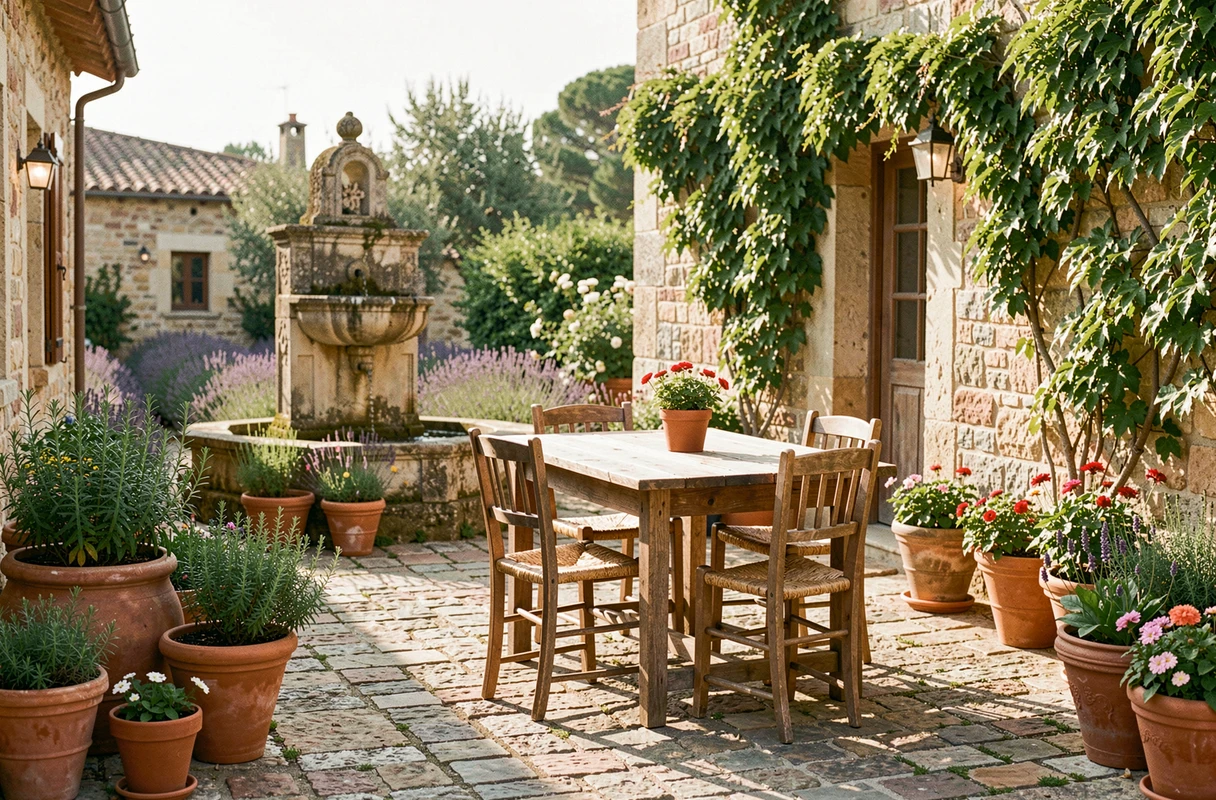
Filming of Tomorrow Is Ours: a geography that extends beyond Sète
The main filming remains anchored in Sète since 2017. The Mediterranean city, wedged between the sea and the Thau pond, provides the visual identity of the series. Wide shots, beach sequences, and the port docks are filmed in the city itself.
The production now extends well beyond Sète. Some recent narrative arcs have been filmed in Agde (notably at Château Laurens and on La Conque beach), Grau-du-Roi, and Port Camargue. The Thau basin and the Hérault coastline form an expanded filming perimeter, not a fixed point.
This geographical dispersion reflects a production logic: the sets are chosen for their visual plasticity, availability, and ability to embody multiple fictional locations. A vineyard can serve as the backdrop for an oyster farmhouse if the vegetation and light match. The filming location is not a permanent address; it is a narrative tool.
Iconic outdoor locations and their function in the series
- The beach of Trois Digues, between Sète and Marseillan-Plage, serves as the setting for the Spoon beach hut visible in many episodes.
- The house used for the exteriors of Chloé Delcourt is a permanent filming location, but only the facade is filmed.
- Victor Brunet’s vineyard corresponds to a real estate located in the Sète hinterland, used only for its exteriors.
- The Haut neighborhood of Sète provides the exterior views of several apartments (Victoire and Georges’ shared apartment, among others).
Modular sets and series tourism in Sète
The locations of Tomorrow Is Ours are increasingly thought of as modular sets rather than fixed addresses. The same real building can serve as the facade for several fictional locations over the seasons. The interiors, on the other hand, change configuration on the set according to the script’s needs.
For fans wanting to visit, this modular logic has a direct consequence: the location you are looking for on screen does not necessarily have a unique equivalent on the ground. The facade of the farmhouse may correspond to one building, its surroundings to another, and its interior to a set located several kilometers away.
Tourist routes dedicated to filming
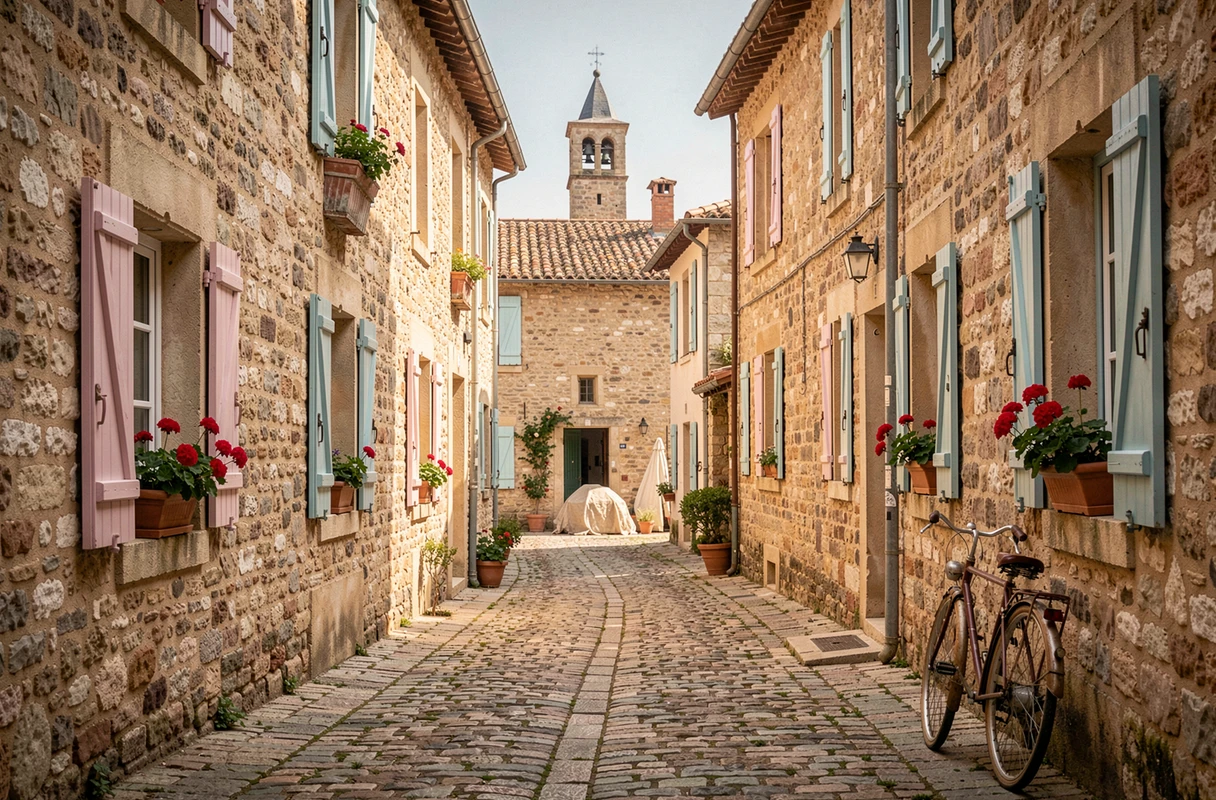
Sète has structured a tourist offer around the series. Guided tours, either on foot or by boat, take visitors to identified filming locations. These circuits attract thousands of visitors each year, according to local press.
These tours help to understand the difference between what appears on screen and what physically exists. Guides explain, for example, that a house filmed from the outside for the series is used only for illustrative shots, while interior scenes are shot in the studio.
Oyster farmhouse of DNA: what fans can actually see
The oyster farmhouse, in the series, is the living and working place of the Delcourt family. On screen, it gives the impression of a complete estate, with buildings, docks, and oyster parks. In practice, the production assembles several sites to create this illusion.
- The facade shots come from a real building located on the shores of the Thau pond.
- The oyster farming work scenes use real oyster parks, but the dialogues are often post-synchronized.
- The interior of the farmhouse (living areas, kitchen) is a studio set reconstructed on the DNA set in Sète.
No unique building corresponds to the farmhouse as it appears in the series. The location is an assembly, which is common in the production of daily soap operas where flexibility takes precedence over geographical authenticity.
Fans visiting Sète to find the farmhouse from Tomorrow Is Ours will find the landscapes, the light, and some facades. The rest belongs to the set, a few hundred meters away, behind doors closed to the public. This is the concrete limit of series tourism: the screen shows a composite location, not an address to visit.