
A dripping faucet, a room that smells musty, a closet that overflows: these small daily signals often reveal an easy-to-fix maintenance issue. Organizing and maintaining your home doesn’t necessarily require a large budget or entire days of work. A few targeted habits, applied regularly, are enough to keep a healthy and functional interior.
Indoor air quality: the often-overlooked starting point
Have you ever noticed a slight persistent odor after closing the windows for several days? Indoor air concentrates pollutants from furniture, cleaning products, and cooking. Before thinking about decoration or storage, checking the ventilation in each room is a priority.
A clogged ventilation system loses much of its effectiveness. Cleaning the extraction vents and air inlets twice a year helps maintain proper air renewal. In the kitchen and bathroom, humidity can quickly stagnate if these openings are blocked by dust.
Volatile organic compounds (VOCs) emitted by paints, glues, and new furniture dissipate slowly. Ventilating for at least ten minutes every morning, even in winter, remains the simplest action to limit their concentration. To find all the information on Info du Web, you will see that air quality is a central topic in home organization.
Smoke detector and home safety: obligations to know
Safety is part of regular maintenance, even if we often forget it. The smoke detector is mandatory in all housing, whether occupied by an owner or a tenant.
Who installs, who maintains?
The owner is responsible for installation. The occupant must ensure maintenance and replacement of batteries or the detector itself. For furnished rentals, seasonal rentals, or employer-provided housing, maintenance may remain the owner’s responsibility.
Regulations changed in June 2025 with a modification to Article R. 142-2 of the Construction and Housing Code, removing the term “standardized” and extending certain obligations to inclusive housing.
Carbon monoxide: a discreet trap
The carbon monoxide detector is not mandatory in France. The DGCCRF reminded this in a report published on March 3, 2025. If your home is equipped with a boiler, stove, or combustion water heater, prevention relies on annual maintenance of appliances and proper ventilation.
Decree No. 2023-641 of July 20, 2023, applicable since October 1, 2023, mandates the maintenance of combustion appliances and the cleaning of flue ducts at least every twelve months. Some local regulations may require a higher frequency.
Surface maintenance: adapt the product to the material
Using the same all-purpose cleaner everywhere seems convenient. The problem is that some surfaces react poorly to unsuitable products. A marble countertop damaged by an acidic descaler, an oiled parquet floor bleached by a bleach-based cleaner: these mistakes can be costly to repair.
Here are the reflexes to adopt according to the most common surfaces:
- Raw or oiled wood: a damp cloth with diluted black soap is sufficient. No foaming products or steam, which can swell the fibers.
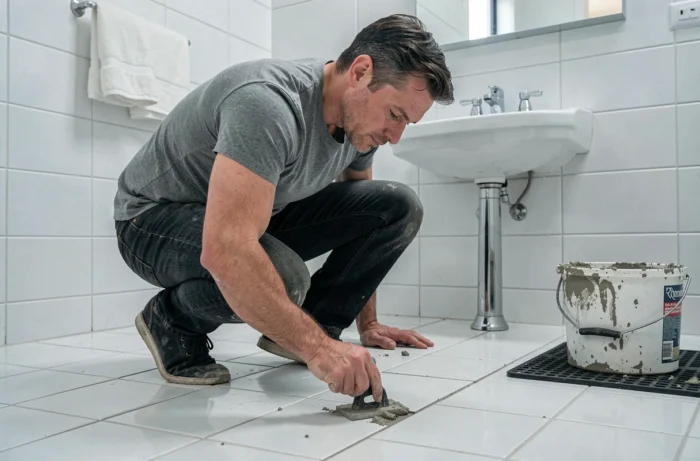
- Tiles and ceramic stoneware: a neutral cleaner (pH around 7) preserves the joints. Acids damage the joint cement over time.
- Stainless steel (sink, hood, cooktop): a mixture of warm water and white vinegar applied in the direction of brushing avoids circular micro-scratches.
- Natural stone (marble, slate, travertine): avoid any acidic product. Diluted Marseille soap remains a safe bet.

Functional storage: think by frequency of use
Sorting by category (clothes, books, papers) is classic. A more effective approach is to organize each room based on the frequency of use of items.
What you use every day should be accessible without opening a closet. Weekly items go into easily accessible storage. Anything that is only used a few times a year deserves to be stored up high or in a dedicated space (basement, attic, on top of a wardrobe).
The box test
Place items you doubt the usefulness of in a box. Note the date. If after six months you haven’t taken anything out of that box, its contents can be donated or recycled. This gradual sorting avoids the radical effect of decluttering in one day, often followed by regrets.
In the kitchen, the same principle applies: everyday utensils (spatula, knife, cutting board) stay on the countertop or in the first drawer. The stand mixer used twice a year does not deserve the central spot in the lower cabinet.
Cleaning products: limit the number to gain efficiency
Accumulating specialized products under the sink creates unnecessary clutter and complicates choices during cleaning. Three to four basic products cover the majority of a household’s needs.
- White vinegar: descaling, light disinfection, window cleaning.
- Liquid black soap: floors, woodwork, gentle degreasing.
- Baking soda: deodorizer, gentle abrasive for resistant surfaces, laundry supplement.
- Marseille soap (real, without added glycerin): delicate textiles, cleaning natural stones.
Avoid mixing vinegar and baking soda in the same bottle: the acid-base reaction neutralizes both substances and produces mainly salty water. Used separately and at the right time, they remain very effective.
A well-maintained interior does not require hours of cleaning or a collection of colorful sprays. Attention to ventilation, respect for materials, and storage thought out by frequency of use do more for daily comfort than any routine fixed on a wall planner.