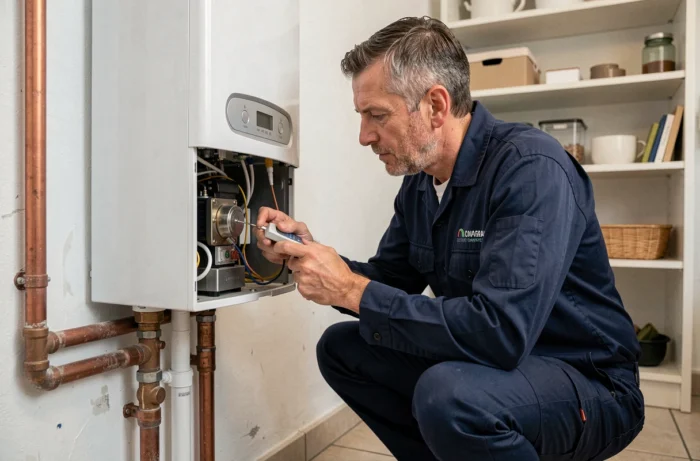
In Brussels, the regulations regarding boiler maintenance vary depending on the fuel used. Gas boilers must be checked every two years, while those using oil, wood, pellets, or coal require annual maintenance. This distinction, specific to the Brussels-Capital Region, remains poorly known by many occupants, whether they are owners or tenants.
Before the heating season, a few targeted checks can help reduce the risk of breakdown when the boiler is most in demand.
System Pressure and Radiator Bleeding: Two Checks That Shouldn’t Be Separated
Loss of pressure in the heating system is one of the common causes of breakdown upon restart. After several months of summer inactivity, air accumulates in the radiators, causing circulation noises, cold spots at the top, or even a complete blockage of the hot water flow.
Bleeding the radiators is the first step. This is done appliance by appliance, starting with the radiator closest to the boiler. Once the air is expelled, it is essential to check the pressure on the boiler’s manometer: bleeding reduces the system pressure, and insufficient pressure prevents the boiler from starting or triggers an error code.
To prepare your boiler before winter in Brussels, this pressure-bleeding pair should be treated as a single action, not as two independent operations. Restoring pressure without bleeding is akin to compensating for a problem without resolving it. Bleeding without checking the pressure afterward exposes you to a failed start at the first cold snap.
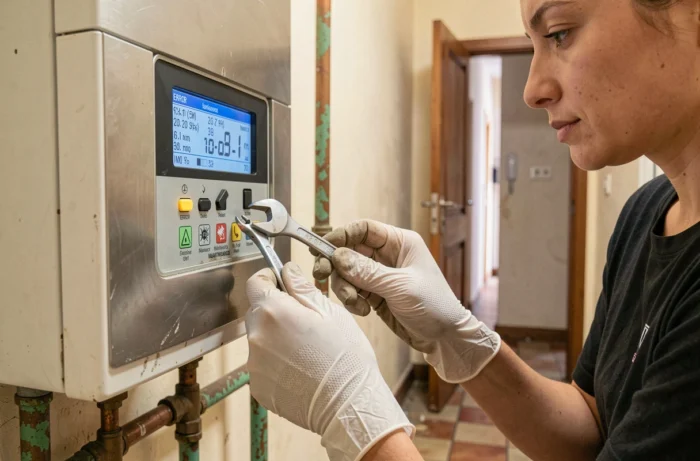
Exhaust of Combustion Gases and Boiler Room Ventilation
General articles talk about burner maintenance. They rarely mention what happens downstream of combustion. The flue for exhaust gases accumulates residues over the months, especially in oil installations. A partially obstructed flue does not always cause a visible breakdown: it degrades the draft, increases energy consumption, and, in the worst case, leads to a backflow of carbon monoxide.
The ventilation of the room where the boiler is located is a safety point distinct from the flue itself. A blocked ventilation grille, a room turned into a storage space with boxes piled against the appliance, or a damaged door seal alters the supply of fresh air necessary for combustion. A qualified technician checks these elements during a complete maintenance visit, but between visits, a visual check remains within the occupant’s reach.
What the Occupant Can Check Without a Technician
- The condition of the low and high ventilation grilles in the room: they should be clear and not obstructed by dust or objects
- The absence of storage of flammable or bulky products in the immediate vicinity of the boiler
- The presence of a functional carbon monoxide detector in the room or in the immediate vicinity
These checks do not replace the intervention of a heating technician, but they help identify a problem before it becomes dangerous.
Thermostat, Outdoor Sensor, and Regulation: Test Before the First Start
A mechanically well-maintained heating system can still malfunction if the regulation no longer responds correctly. The room thermostat, the outdoor temperature sensor (when it exists), and the summer/winter switch mode are three elements to test before the first ignition.
A thermostat that does not trigger the boiler despite a high setting indicates either a battery issue (on wireless models), a wiring fault, or a malfunction of the thermostat itself. The diagnosis is simple: raise the setting well above the ambient temperature and check that the boiler starts within minutes.
The outdoor sensor, mounted on a north or northwest wall of the building, may be dirty, displaced by facade work, or disconnected. If the boiler operates in climate regulation mode, a faulty sensor skews the heating curve and leads to overconsumption or thermal discomfort that is difficult to diagnose in the middle of winter.
Summer/Winter Switch: A Common Oversight
On many mixed boilers (heating and hot water), the summer mode disables the heating circuit while maintaining hot water production. Forgetting to switch back to winter mode is a cause of phantom breakdown: everything seems to work, hot water flows, but the radiators remain cold. This simple adjustment prevents unnecessary service calls every autumn.

Oil Storage: An Overlooked Aspect for Oil Boilers in Brussels
Brussels households still equipped with an oil boiler face an additional constraint before winter: the condition of the tank and the quality of the stored fuel. Oil degrades over time. Condensation water can accumulate at the bottom of the tank during the summer, promoting the growth of bacteria and sludge that clog the filter and nozzle of the burner.
Filling up with oil at the end of summer limits condensation in the tank, as a full tank offers less surface area for humid air. Checking the condition of the oil filter before the heating season helps avoid a burner blockage at the worst moment. For underground tanks, periodic leak checks are also recommended, especially since Brussels regulations strictly govern storage installations.
- Visually inspect the tank (or request a check for underground tanks) for signs of corrosion or leaks
- Replace the oil filter if the last change was over a year ago
- Order oil early enough to avoid demand spikes and extended delivery times in October-November
Preparing a boiler before winter is not just about an appointment with a technician. Bleeding, pressure, ventilation, regulation, fuel storage: each link in the chain can cause a breakdown if neglected. In Brussels, adhering to the legal maintenance frequency according to the type of fuel remains the foundation, but the intermediate actions described here significantly reduce the risk of unpleasant surprises at the first cold snap.