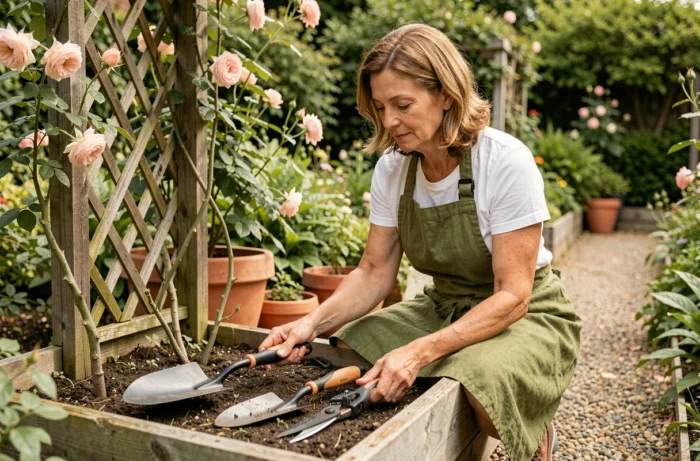
Garden equipment is not limited to a table and four chairs placed on a terrace. The term encompasses everything that allows for the daily use of an outdoor space: furniture, maintenance tools, shading devices, and irrigation systems. Choosing this equipment wisely means first understanding the real constraints of the land and climate before thinking about style.
Water stress and heat: adapting your garden equipment to the current climate
Repeated drought episodes in France are changing the way outdoor spaces are designed. According to data from VALHOR reported by FloralDaily in September 2026, French consumers are increasingly looking for plants and equipment that are compatible with high temperatures, as well as information on water needs and contributions to biodiversity.
Specifically, this means favoring equipment that limits water consumption: a rainwater collector connected to a programmable irrigation system, mineral or organic mulch to reduce evaporation, and choosing plants that are resistant to water stress rather than traditional grass that requires heavy watering.
The furniture itself is also affected. A dark metal table exposed to full sun becomes unusable in summer. The choice of shading (offset parasol, stretched sail, bioclimatic pergola) is no longer just a decorative accessory. As France Info pointed out, bioclimatic pergolas allow for heat regulation under the structure by adjusting the slats according to sunlight. This type of investment radically changes the use of a terrace during the hot months.
To compare solutions suitable for different configurations, the equipment offered by Tradition Jardin covers a wide range from furniture to outdoor maintenance accessories.
Garden maintenance: choosing the tools you will actually use
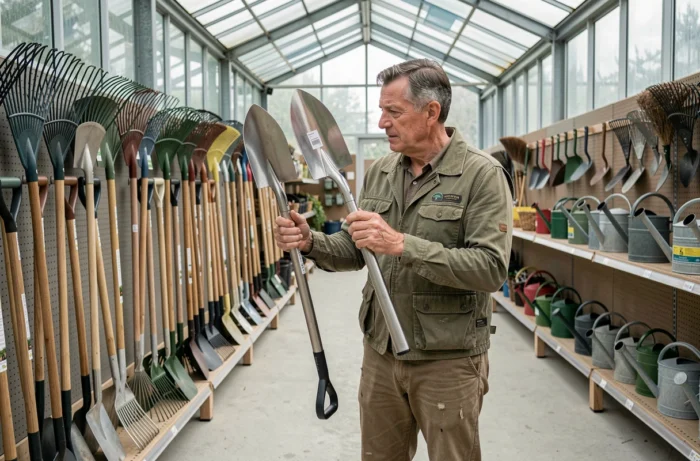
The 2026 VALHOR barometer shows that spending by individuals is increasingly focused on maintenance rather than large landscaping projects. This observation should guide your purchases: it’s better to have a quality pruner, hedge trimmer, and blower than an oversized ride-on mower for a small yard.
Battery-powered tools now dominate the domestic gardening market. They are quieter, do not emit exhaust gases, and their battery life is sufficient for most private gardens. The criterion to watch is not the displayed power but the compatibility of batteries between tools of the same brand. Buying within a single ecosystem (one battery format for the hedge trimmer, brush cutter, and blower) reduces overall costs and simplifies storage.
Tools to have for regular maintenance
- An anvil or bypass pruner depending on the type of plants (hardwood or green stems), used almost daily in spring and autumn.
- A programmable irrigation system, even basic, that prevents water waste and maintains plantings during summer absences.
- A battery-powered blower-vacuum for cleaning fallen leaves on the terrace and walkways, much more versatile than a simple rake on hard surfaces.
- A repair kit for the furniture (stainless steel screws, hinge oil, wood treatment product), often overlooked but extends the lifespan of existing items.
Garden furniture materials: real durability versus perceived durability
Aluminum, wood, woven resin, and treated steel are the four main families of materials for outdoor furniture. Each ages differently, and the commercial promise does not always match the reality observed after a few seasons.
Wood (teak, acacia, treated pine) offers a warm aesthetic but requires annual maintenance: light sanding and application of oil or saturator. Without this, it can gray in a few months. An unmaintained wooden lounge loses its mechanical strength, not just its appearance.
Aluminum resists corrosion and only requires cleaning with soapy water. Its main drawback is comfort: without cushions, an aluminum chair remains cold in spring and scorching in summer. The budget for cushions and protective covers is an integral part of the real cost.
Woven resin (high-density polyethylene) combines lightness and UV resistance. Its quality varies significantly from one manufacturer to another. A simple test: bend a strand of the weave between your fingers. If it breaks cleanly, the resin is of poor quality and will degrade in one or two seasons.
Repairability: an underestimated criterion
The REP (extended producer responsibility) system encourages manufacturers to design more durable and repairable products. At the time of purchase, check the availability of spare parts: replacement slats for a wooden table, strands of resin, specific screws. A repairable piece of furniture may sometimes cost more at purchase but is cheaper over five years than a disposable model replaced twice.
Comfort and space: sizing before decorating
The first mistake in outdoor design is buying a garden lounge that is too large for the available space. A dining table requires a clearance of at least the width of a chair on each side so that guests can sit and stand up without hindrance. Measuring the terrace or dedicated area before any order avoids many disappointments.
- For a dining area regularly accommodating four people, a square table occupies less usable space than a rectangular table of the same capacity.
- A low relaxation lounge (corner sofa, coffee table) requires a larger floor area than its compact appearance suggests, especially if you add a circulation path.
- Deck chairs and sun loungers require an area free of any shading to fulfill their function, making them incompatible with a small north-facing balcony.
Measuring the available space remains the first step before any furniture purchase. The comfort of a garden or terrace depends less on the number of pieces than on the smooth flow between areas.
The choice of durable garden equipment relies on three concrete trade-offs: compatibility with the local climate, the actual frequency of use of each tool or piece of furniture, and the ability to maintain or repair what one owns. A well-equipped garden is not one that accumulates the most objects, but one where each element is used regularly.